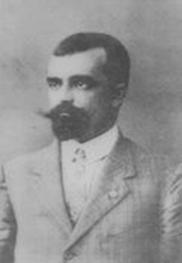
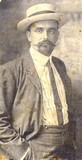
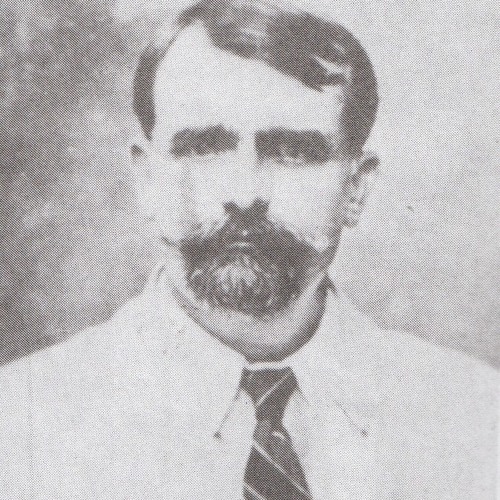
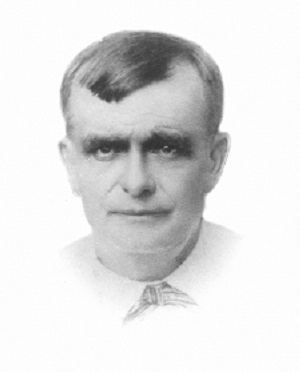
Eugénio Tavares
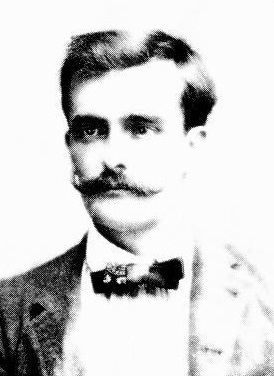
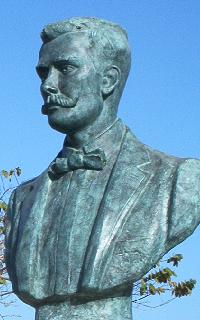
Eugénio Nozolini de Paula Tavares
Nova Sintra, Brava Island, 1867 – Nova Sintra, Brava Island, 1930
Composer, poet
An icon of Cape Verdean culture, Eugénio Tavares was immortalized not only as a musician and composer but also for his contributions to poetry, theather, and journalism. His birth date, October 18th, is celebrated as the National Day of Culture, which was institutionalized in 2005.
Tavares is considered one of the first composers of mornas to gain widespread recognition, as noted by Vasco Martins in his book Música Tradicional Cabo-Verdiana I – A morna (1989). Above all, Tavares helped define morna as we know it today – full of lyricism, with themes of the sea, departure, and longing as its central motifs.
He created most of his mornas in Cape Verdean Creole. In Portuguese, he wrote chronicles, fiction. and poems, but above all, he produced powerful journalistic works on the issues of his time. His strong republican stence led to political persecution and caused significant disruption to his personal life over the years.
Eugénio Tavares used several pseudonyms in his writings, such as Djon de Mamai, Tambor-mor, Jack, among others. According to historian João Nobre de Oliveira, “with all justice, we can call the poet from Brava a phenomenon”, because despite his limited formal education, his contemporaries – who had higher degrees – treated him as a master. Politically independent, he was regarded by governors as either a “fearsome adversary or an influential friend”, Oliveira writes in A Imprensa Cabo- Verdiana: 1820-1975 (1998).
Eugénio Tavares’s father was Portuguese (from Santarém) and his mother was from the Barbosa and Medina families (from the island of Fogo). They lived in Geba, in the Cacheu region of Guinea. According to the poet’s grandnephew, Eugénio Tavares de Sena (Cabo Verde & a Música – Dicionário de Personagens), who reveals that Eugénio Tavares was born in Brava because his mother had a complicated pregnancy and, for this reason, moved to her home island.
“Its sorrowful music will stir the feelings and dreams of Cape Verdean men and women in the future, as it does now, and its expression will never die on the lips of future generations…”
José Lopes, in A Mocidade Africana, 07.01.1930, on the musical work of Eugénio Tavares
Another aspect related to security is that his father’s properties had been attacked during na uprising, a situation not uncommon in Guinea at the time. Due to the torrid heat on the island. of Fogo, the pregnant woman left with her 7-year-old daughter for Brava, which was the usual destination for those seeking a milder climate during the summer. They stayed at the house of close relatives, the Sena Family, where Eugénio Tavares was born. Shortly afterward, his mother died from a postpartum infection. The two orphaned children were taken in by family members: the girl stayed with the Sena family, while the baby was raised by José Martins Vera-Cruz and his sister, Eugénia Vera-Cruz Medina.
Eugénio Tavares completed his primary education in 1880 and, from 1885 onwards, he lived for some time in São Vicente, working in a commercial house. In 1889, he joined the civil service and, over the years, held several positions: customs bailiff, private receiver, and delegate of Correios da Brava. He also served as a member of the Board of Public Instruction in Brava and spent some time working in Tarrafal, then the headquarters of the municipality of Santa Catarina, Santiago. Tavares began to have conflicts with his supervisors early on. His criticisms, combined with his republican stance, led to a campaign against him in 1898, which lasted for several years. He was accused of embezzling funds from the department by failing to present accounts. In 1990, he published a pamphlet in his defense, Notas sobre um fabuloso alcance de 16 contos de réis na recebedoria do concelho da ilha Brava de Cabo Verde. That same year, he left for the United States, where he founded the newspaper A Alvorada in New Bedford, from which he launched attacks against the monarchical regime.
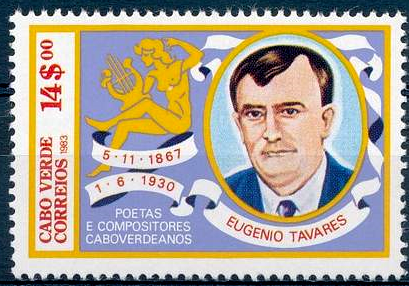
In 1914, Tavares was again targeted in relation to the embezzlement case. Amid controversy in the press, since he had never stopped writing his critical articles, he spent some time in prison, and there was a coercive collection of his debts, Some of the buildings belonging to his deceased adoptive father and his brother – who had been his guarantors – were solda t public auction, according to A Imprensa Cabo- Verdiana: 1820-1975 (1998). Only in 1921 was he tried and acquitted.
His collaboration with the press began early, with a poem dedicated to his godmother published in the Almanaque de Lembranças Luso-Brasileiro in 1885. Over time, he collaborated to various publications, such as Revista de Cabo Verde, O Manduco, Almanaque Luso-Africano, A Voz de Cabo Verde, among others. In addition to his newspaper articles, poems, and mornas, Eugénio Tavares was also the author of plays, such as A Peçonha and Filhos que traem e filhos que salvam. He also translated into creole excerpts from the works of Portuguese poets João de Deus (“Engeitadinha”) and Luís de Camões (“Bárbara, bonita escrava”), which are part of the volume Mornas cantigas crioulas, published in 1932.
As an author of mornas, Eugénio Tavares’s work includes dozen of compositions, the exact number of which is difficult to establish. The compilation Mornas cantigas crioulas contains the lyrics of 27 of his mornas in the first edition. At the same time, ten mornas recorded by different artists – including some of the most well-known, such as “Cai no mar” (often titled “Meu bem”) and “Canção ao mar” (or “Mar eterno”) – are not included in the1932 edition. However, both appear in an addendum to the 1969 edition, along wirh “Camponesa formosa” and “Canções aladas”.
Se bem é doce
Bai é maguado
Mas, se ca bado
Ca ta birado!
Verses by Eugénio Tavares about departures and returns are engraved
on a monument at the entrance to Praia International Airport
In addition to composing mornas – on a Portuguese guitar, it is said, though according to violinist Nho Raul de Pina, he also mastered other instruments (Artiletra, May/June 2003) –, Eugénio Tavares wrote a preface titled “A morna e o povo de Cabo Verde” for the compilation Mornas cantigas crioulas. Although his primary interest was politics, as most of his writings reveal, he was also concerned with cultural issues. In this preface, he laments the lack of attention given to this area in Cape Verde. This text became a reference for all those who have since written about Cape Verdean music, establishing that the morna was born in Boa Vista, evolved in São Vicente, took on specific characteristics in Santo Antão and Fogo and, “finally, on Brava Island (…), he fixed his eyes on the sea and the blue space, and acquired that sentimental line, that harmonious sweetness that caracterizes Brava songs”.
The theme of Tavares’ compositions mainly revolved around passionate love, sometimes experienced as martyrdom, absence, or sin, and sometimes exalted as sublime, light, and grace from heaven. The woman is always the central figure, whether evoking tears or laughter. The sea, departure, and longing fit naturally into the love scenarios of Eugénio Tavares’ verses, but they also reflect the broader issue of emigration. This theme was deeply felt by the entire Cape Verdean society over time, but it was particularly crucial for the people of Brava at the end of the 19th and beginning of the 20th century. The morna Despedida is subtitled “Marinheiros que partem”. While “Hora de bai, hora de dor”, is the opening line of Morna de Despedida, one of the best-known mornas of all time.
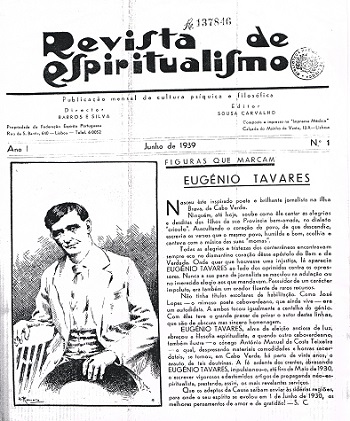
While Eugénio Tavares is often seen as a freemason and a committed republican, with some anticlerical writings, his character also appears linked to various spiritual currents. This is evident in the fact that he composed hymns for the Church of the Nazarene, which arrived in Brava in 1901, and his collaboration with O Missionário Católico, where he published the poem “Santo António do Serrado”. His connection to spiritualism is further revealed by his association with Revista de Espiritualismo, the organ of the Portuguese Spiritist Federation, which, in its first issue (June 1939), paid homage to Eugénio Tavares with his image and biographical data on the cover. This publication dedicated each edition to an illustrious spiritualist, and Tavares was the first featured in the series, highlighting that his connection to this doctrine was not insignificant.
Regarding his legacy, Vuca Pinheiro summarizes: “He was the interpreter par excellence of the Brava soul, understanding like no one else the aspirations and feelings of our people, having transformed our morna into the vehicle of Brava’s nostalgia and sentimentality” (cover of the CD Sãozinha canta Eugénio Tavares). Artur Vieira, for his part, writes: “Eugénio has the magic of being presente in all Cape Verdean communities, in each heart of our people, who bear his atavistic presence through the songs he composed” (Cimboa, 1997).
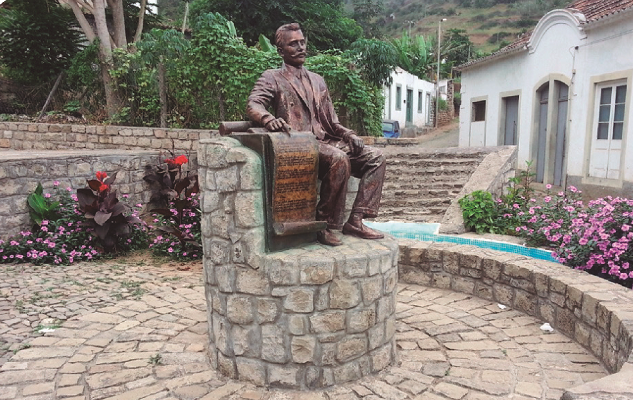
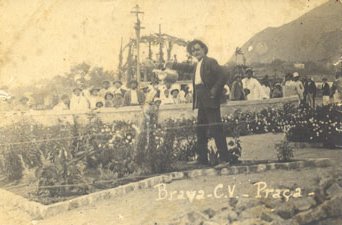
In the town of Nova Sintra, a bust of Eugénio Tavares stands in the central square, which is named in his honor. In 2006, a house museum was established in the building that once served as his family’s residence. Based in Sintra, Portugal, the Eugénio Tavares Foundation works to promote his work through its website, traveling exhibitions, and support for the museum house in Brava. In 1995, the Presidency of the Republic of Cape Verde awarded him the First Degree of the Order of the Dragoeiro.
Songs
Bida Sem Bo Luz, Bo Odjo Preto e Docem Contam Nha Cretcheu, Quim Portam La, Tarde na Aguada (parcerias com José Medina); Meu Bem (Cai no mar)/Meu Bem Se Eu não Te Amo (parceria com Teresinha Sena); Amor é carga? Amor é culpa?; Andorinhas di Bolta; Brada Maria; Camponesa Formosa; Canção ao Mar; Canções Aladas; Cantiga que Deus ensinam; Carta di Nha Cretcheu; Carta quén escrebé nha Lima; Corda de sacramento; Cusas dess mundo; Dispidida (Hora di Bai); E Sim Quel Ta Fazêdo; Enganosa; Flor de rosera; Força de Cretcheu; Lua noba; Mal de Amor; Mar de Lua Cheia; Minino Ná; Morna de Aguada; Morna de bedjiça; Morna na Santana; Mujer bonita; Na cantero de nha peto; Nha cantar; Perde Rebocador; Quel alma já bem papiá; Quem pessoa; Sodade de quem que´n qré!; Vida sem bo luz.
Written music (sheet music)
- Músicas de Cabo Verde – Mornas by Eugénio Tavares transcribed by Jotamonte, Gráfica do Mindelo, SV, 1987.
Published work
- Pretidão de amor. Ed. Xavier da Cunha, [?], 1893 (Where the translation of “Bárbara, bonita escrava” is originally found, later reproduced in Mornas, Cantigas Crioulas).
- Ao povo caboverdeano. Tip. E. da Cunha e Sá, Lisboa, 1910 (reproduced in Viagens tormentas cartas e postais).
- O mal do amor – Coroa de espinhos. Imprensa Nacional de Cabo Verde, Praia, 1916.
- Amor que salva, santificação do beijo. Imprensa Nacional de Cabo Verde, Praia, 1916.
- Manidjas, s/d (reproduced in Mornas, Cantigas Crioulas).
- Os Cossacos (poesia), Livraria Rodrigues e Cia., Lisboa, 1918.
- Mornas, Cantigas Crioulas, J. Rodrigues & Cª Editores, Lisboa, 1932. Republished bu the Liga dos Amigos de Cabo Verde, Luanda, 1969.
- Poesia contos teatro. Org. Félix Monteiro. Instituto Caboverdiano do Livro, Praia, 1996. Compiles production in different genres spread across several newspapers and the books O mal do amor – Coroa de espinhos, Amor que salva, santificação do beijo e Mornas, cantigas crioulas, as well as na apêndix with texts about the morna, one by Eugénio Tavares and other by Baltasar Lopes and José Alves dos Reis.
- Pelos Jornais… Org. Félix Monteiro. Instituto Caboverdiano do Livro, Praia, 1997. Compiles texts published in A Marselhesa, Revista de Cabo Verde, A Alvorada, A Liberdade, A Voz de Cabo Verde, O Manduco, a publication on the fourth centenary of Vasco da Gama and Brava, excerpts from a monograph, from the Boletim da Agência Geral das Colónias, 1929.
- Viagens tormentas cartas e postais. Org. Félix Monteiro. Instituto da Promoção Cultural, Praia, 1999. Includes the texts of Cartas Caboverdeanas; Notas sobre um fabuloso alcance de 16 contos de réis na recebedoria do concelho da ilha Brava de Cabo Verde; collaboration with A Voz de Cabo Verde and O Manduco; the letters to Henrique de Vilhena; and na apêndix with texts by various authors about Eugénio Tavares.
To learn more
A Imprensa Cabo-verdiana, 1820-1975, by João Nobre de Oliveira, Macau, Fundação Macau, 1998.
Cabo Verde & a Música – Dicionário de Personagens, by Gláucia Nogueira, Campo da Comunicação, Lisboa, 2016. Verbete Eugénio Tavares.
Eugénio Tavares. Retratos de Cabo Verde em Prosa e Poesia, by Genivaldo Rodrigues Sobrinho, Pedro Cardoso Livraria, Praia, 2017.