Frank Cavaquinho
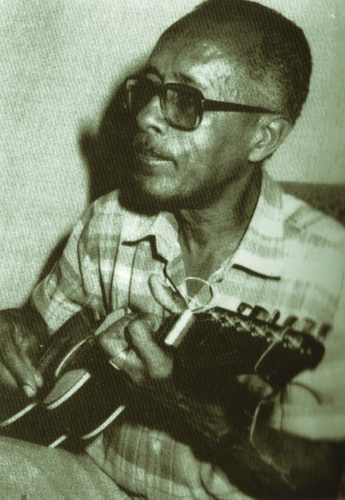
Francisco Vicente Gomes
Ribeira Grande, Santo Antão, 1927 – Rotterdam, Holand, 1993
Songwriter, multi-instrumentalist
Frank Cavaquinho is among the most recorded songwriters in Cabo Verdean music from the 1960s. Most of his work – around fifty songs – are coladeiras. Several of them have lyrics that, mixing irony and mischief, are tinged with a good-natured misogyny with a moralizing intent, which has contributed to the perception of coladeira as a genre that often criticizes women. However, it would be reductive to place Frank Cavaquinho solely within this context.
For one, lyrics do not define a musical genre. More importantly, what matters is what the lyrics reveal – speaking of riots, vanities, fads, pleasures, and missteps – about the daily life and mentality of the time. This is a quintessential attribute of popular music composers, who, through creativity, transform small joys and sorrows into works that endure.
Some of these songs received direct responses. Manuel d’Novas recalls in Cabo Verde & a Música – Dicionário de Personagens: “He sold water at the Monte Sossego fountain, and the neighborhood girls would pass by. He wrote that song, saying the girls of Monte Sossego were good for nothing, always running around doing certain tricks. So I wrote a response praising them, to contradict him.” According to Moacyr Rodrigues, in Mornas e Coladeiras de Frank Cavaquim (1992), a compilation of some of the composer’s lyrics, “Minininhas de Monte Sossego” nearly led to Frank being stoned by young women who felt offended by the lyrics, which criticized their bad language and behavior. Another song that received a response was “Holandeza”, which portrayed the wives of emigrants indulging in luxuries and frivolities with money their husbands sent from abroad. In his lyrics, Novas recalls referencing the “little chain on his finger” that Frank always wore with his keys. “When I mentioned the chain, he immediately realized it was about him. But we were good friends; we called each other compadres.”
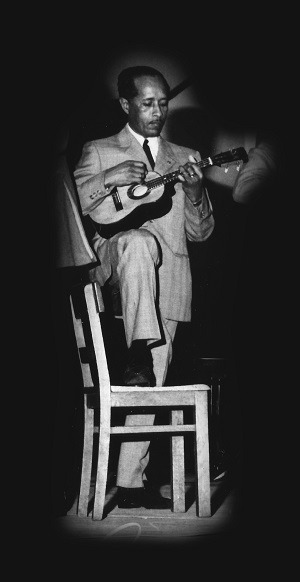
Around eighty recordings of Frank Cavaquinho’s songs – excluding repetitions and rhapsodies – appear on albums by a wide variety of artists, beginning with Titina and Djosinha. An EP released by Casa do Leão in 1960, featuring these two singers (with Frank on drums, alongside Luís Morais on clarinet, Lela Preciosa and Toim on guitars, José Pinto on double bass, and Euclides on cavaquinho), was composed entirely of his songs: “Puli rua”, “Holandeza” and “Juvita de praça”, sung by Djosinha; and “Estanhadinha”, sung by Titina. Titina recalls those days, when she and Frank hosted a live show on Thursdays on Rádio Clube do Mindelo. “He would wait for me outside of school to teach me new songs – he was composing a lot of coladeiras at the time” (Cabo Verde & Its Music – Dictionary of Personalities). Among the many songs he composed, the one Titina recorded on her debut album became the most recorded. She re-recorded it in the 1960s with the Conjunto de Cabo Verde. Bana and Fernando Quejas also recorded it. In the1990s, Cesária Évora made it one of her biggest hits, recording both studio and live versions. Though best known for coladeiras, some of his mornas – notably “Eternidade”, “Console di nha vida” and “Rotcha nu” – are among his most recorded works.
Like many composers, Frank Cavaquinho’s discography includes songs sometimes misattributed. Album covers are not always reliable. The coladeira “Surpresa” appears on some records as a Luís Morais song, on others as Frank’s; “Sabine largame”, by Cacói, sometimes appears under Frank’s name – though Moacyr Rodrigues claims in his compilation that Frank added two new stanzas to Cacói’s original; “Estanhadinha” is sometimes attributed to Ti Goy, while “Puli rua” and “Sampadjuda” are listed on various recordings as “traditional”, a label often used when the author’s identity is unknown.
Frank Cavaquinho excelled not only on the instrument that gave him his nickname – learned in childhood in Santo Antão – but also on the drums, which he played for Voz de Cabo Verde (I). He was one of the founders of this group and stayed with it until around 1973. He moved to the Netherlands in 1964, working at the Heineken brewery. There, he wrote to Luís Morais – then in Dakar, along with other future Voz de Cabo Verde (I) members – inviting them to join him. This is how the group, originally named Os Verdianos, began. Before that, Frank played cavaquinho on the 1965 LP Cabo-verdianos na Holanda, the first in a long series by Casa Silva (later Morabeza Records), featuring Edmundo and Tazinho on guitars; Pirra and Djunga de Biluca on percussion. Recordings he had done in São Vicente, with Luís Rendall and his son were released around the same time on two Eps also also titled Mornas de Cabo Verde. These marked the recording debut of Cesária Évora.
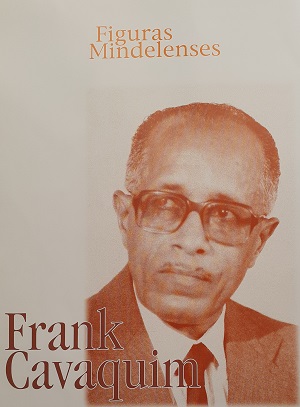
Throughout his time in the Netherlands, he remained musically active. He accompanied Humbertona (Lágrimas e dor and Dispidida), Nho Balta (Terra livre – under the name Voz de Pove, with Duca d’Nho Pitra), Tazinho, on (Dia grande and Hora di bai), and Frank Mimita (Hora já tchegá, noted on the cover as “with the ensemble of Frank Cavaquinho and Jon Spedinha”) With Jon Spedinha, Chala, and others (some unnamed on the album cover), he recorded Sanjon na Ribera d’Jilion, which he arrange and on which several of his songs appear. During this time of nationalist affirmation, it was a work celebrating traditions like São Silvestre and kolá Sanjon, and featured protest songs such as “Labanta braço” and “Exploraçon cabod”. Also in this context, the LP Música cabo-verdiana – Protesto e luta, released by PAIGC in 1973, features Frank on both drums and cavaquinho.
Back in São Vicente in the 1970s, he worked at the Morabeza clothing factory, participated in Cabosamba, accompanied Hermínia and others on Cape Verdean nights, and appeared on Kiki Lima’s first recording, a cassette made on Rádio Voz de São Vicente in 1982. He spent another period in the Netherlands in the 1980s and died there of cancer in 1993. The year before, he performed in benefit concerts in Mindelo and Paris held in his honor. He was hospitalized in the Netherlands but had hoped to return. According to Manuel d’Novas. “A few days before he got worse, he wrote me a letter asking me to keep it a secret – he said he was coming to surprise everyone. I received the letter one day, and three days later, he died. He was supposed to arrive in São Vicente on May 2nd, and the news came on the 1st.
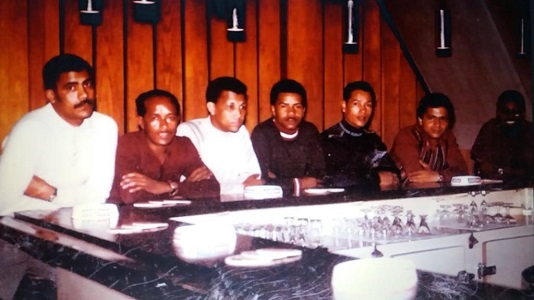
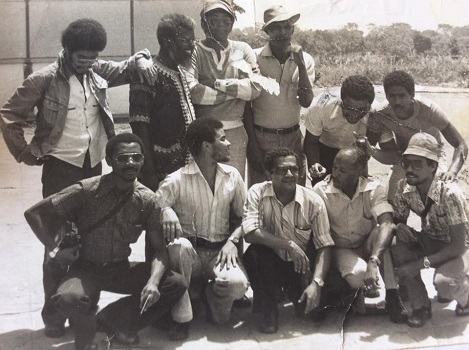
Compositions
Abol na Selada d´Morrim; Agora e Abol; Alma Limp; Aviadora; Bidja / Bidja Ca Ta Lumia; Bingala d´Po; Capechona; Console di Nha Vida; Destino dum Criol; Direit d´Pov; Escontrol d´Vida; Espim d´Obroi; Estanhadinha; Eternidade Bô Ê Triste; Finta; Firvura; Frá Brók; Ganhá Gastá; Ganha Poco Vive Bem; Gorrim; Holandeza; Hora Negra; Injúria; Juvita de Praça; Lembram na Bo ; Mantenha; Mnininha de Monte Sossego; Nha Bitinha; Parede Bedje; Passá Sabe; Pedra Ma Pedra; Perdida; Perte e Sebe; Pitche Patche; Praia d´Porto Novo; Puli Rua; Quem Bô ê; Quem tem Ódio; Resposta d´Ganha Pouco; Rotcha Nu; Sampadjuda; Sanjon na Ribera d´Jilion; Tcha so Nos; Tra Cavala na Bolsa; Três Litrinha; Trocá d´ideia; Vida Dur ê na Merca.
Listen
Tribute to Frank Cavaquinho, in São Vicente, July 2022. The participating musicians were Voginha (guitar), Tey Santos (drums), Jimmy (bass), Chico Serra (keyboard) and Samu (ukulele). Singers: Manecas Matos, Constantino Cardoso, Edson Oliveira and Beti Almeida.